Choosing Garden Shade: Awnings, Pergolas, and Trees
Compare awnings, pergolas, and trees to choose garden shade that fits your patio’s sun, daily use, desired flexibility, and appetite for upkeep.
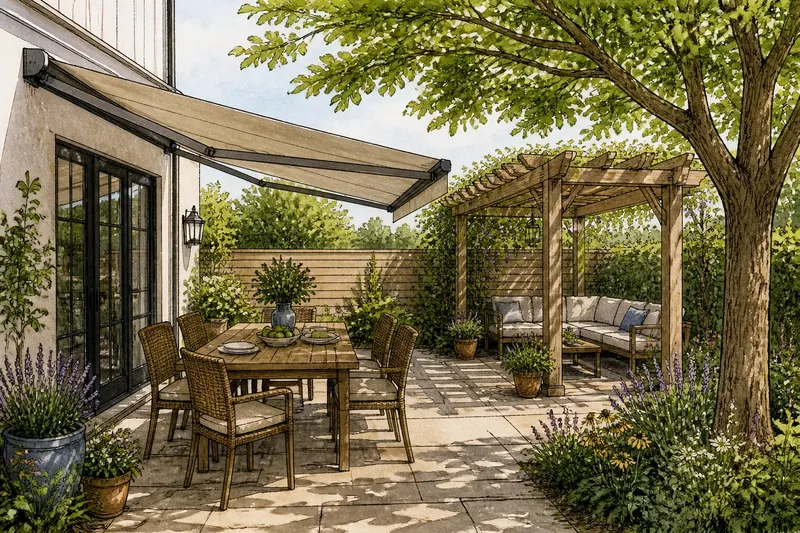
The most common garden shade mistake is choosing a covering for its appearance before checking where the sun falls and how the patio is used; the cost is cover that misses the seating area or makes the space harder to enjoy. Awnings, pergolas, and trees each cast shade differently, so the right choice depends on the patio’s exposure, your routine, and how much upkeep you want.
Match shade to use
An awning extends shelter from the house and can be retracted when you want the patio open. It suits a defined seating area where adjustable cover matters. Check the manufacturer’s instructions and the wall or roof conditions before choosing an awning; a qualified installer can advise on mounting and local requirements.
A pergola marks out an outdoor room without necessarily blocking much sun. Bare beams leave open patches, while slats, a fabric layer, or climbing plants change the amount and pattern of shade. Decide what kind of cover you want before selecting the structure, since its frame alone may not meet your needs.
A tree creates a living canopy that changes with the seasons and as it grows. It can connect a patio to the wider garden, but it is not an instant or precisely adjustable cover. Check the tree’s expected mature spread, roots, and suitability for your site with a local nursery or arborist.
Check the patio conditions
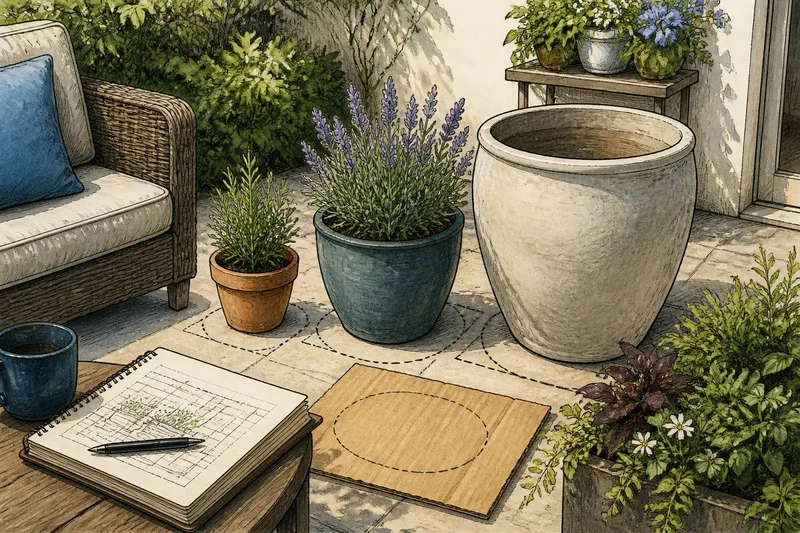
Observe the patio at the hours you normally sit there. Note which seats receive direct sun, where the house casts shade, and whether you want the whole area covered or only a reading chair or dining table. A sketch of the patio and the sunlit areas can make the comparison easier.
Consider what lies beneath and beside the proposed shade. A dense cover can reduce light for nearby pots or garden beds. Trees can drop leaves, seeds, or fruit, depending on the species. A pergola may create alternating bands of sun and shade. These effects are part of the choice, not afterthoughts.
Say your patio has a west-facing dining table that gets direct sun during dinner, and you still want morning light on nearby planters. You sketch the table and planters, then observe that the house provides no useful evening shade. A retractable awning over the dining area emerges as the more flexible fit: you can extend it for dinner and retract it to keep the planters brighter. A pergola remains an option if you prefer a permanent frame, but you would need to choose a top covering that gives enough evening shade without unnecessarily dimming the planting.
Compare care and flexibility
Before choosing, use these observations to decide what to investigate or select next:
- Sun reaches the seats only at certain times: If you need cover just then, consider a retractable awning; otherwise, compare fixed options that shade the area more consistently.
- The patio needs a clear outdoor-room boundary: If a visible frame matters, consider a pergola; otherwise, an awning may provide cover without adding a freestanding structure.
- You want immediate cover: If waiting for a tree to grow does not suit your needs, consider a built covering; otherwise, plan a suitable tree with its eventual size in mind.
- Nearby pots or beds need ample light: If a broad canopy would dim them too much, place shade selectively or choose an adjustable covering; otherwise, assess a tree or denser cover for the area.
- You prefer a changing garden canopy: If seasonal light and routine tree care suit your habits, ask a local nursery or arborist about appropriate species; otherwise, compare fabric or slatted structures.
- You do not want to manage a fixed cover: If retracting or cleaning fabric sounds inconvenient, compare a simpler structure or suitable planting; otherwise, check the product’s care instructions before buying.
Questions about garden shade?
Is an awning better than a tree?
An awning suits a defined area where adjustable shade matters. A tree suits a garden where a lasting canopy and seasonal changes are welcome.
Does a pergola provide full shade?
Not necessarily. Open beams let sunlight through, so the cover depends on the design and on whether you add slats, fabric, or plants.
Can a tree shade a patio right away?
A newly planted tree may not provide the canopy you need immediately. If you need more cover sooner, consider a built option while planning for the tree’s eventual size.
What should I check before choosing garden shade?
Note where direct sun reaches the patio, what you do there, and whether you want fixed or adjustable cover. For structures and installation, follow manufacturer guidance and check applicable local requirements.
Plan for ongoing care
Fabric coverings may need cleaning and seasonal attention. Structures need care suited to their materials, while trees require room and ordinary horticultural upkeep. Compare those demands with the time and attention you want to give the patio.
Garden shade works best when its location and upkeep suit the way you use the space. Mark the sunlit seats, consider nearby planting, and compare awnings, pergolas, and trees against those observations. If mounting, tree suitability, or local rules are uncertain, ask a qualified installer, nursery professional, or arborist before committing.