The Pot-Size Myth: Why Bigger Is Not Automatically Better
Choosing patio pots by plant, placement, and care needs helps avoid awkward scale, excess weight, and soil that stays wet longer than expected.
The most common patio-pot mistake is choosing the largest container that will fit, then discovering it is awkward to place and slow to dry. Pot size affects more than root room: it changes how a planting looks, how easily you can move it, and how often you need to check its soil. Choosing the right pot size for a patio plant starts with the plant’s needs and the spot you have in mind, not with the biggest container in the garden center.
Start with the plant
A container should give a plant room to grow without surrounding its roots with a disproportionate amount of unused mix. A very large volume of potting mix can stay damp around a small root ball, especially in a sheltered corner or during cool, cloudy weather. That does not mean a roomy pot is always a problem; it means the match between plant, mix, drainage, and conditions matters.
Check the plant’s current root ball and its likely mature form. A compact herb, such as thyme, may suit a modest pot, while a spreading ornamental grass needs more room for roots and foliage. Look at the plant tag for container guidance, and consider how quickly the plant grows and whether you plan to keep it for one season or several. The tag and the container manufacturer’s instructions are the right references for plant-specific requirements and drainage details.
Think about the whole planting, too. Several plants sharing one container compete for the same soil volume. A pot that comfortably holds one small plant may feel crowded when filled with a thriller, filler, and trailing plant combination. Allow room for foliage to develop, but do not treat extra soil as a substitute for choosing plants suited to the container.
Judge the patio setting
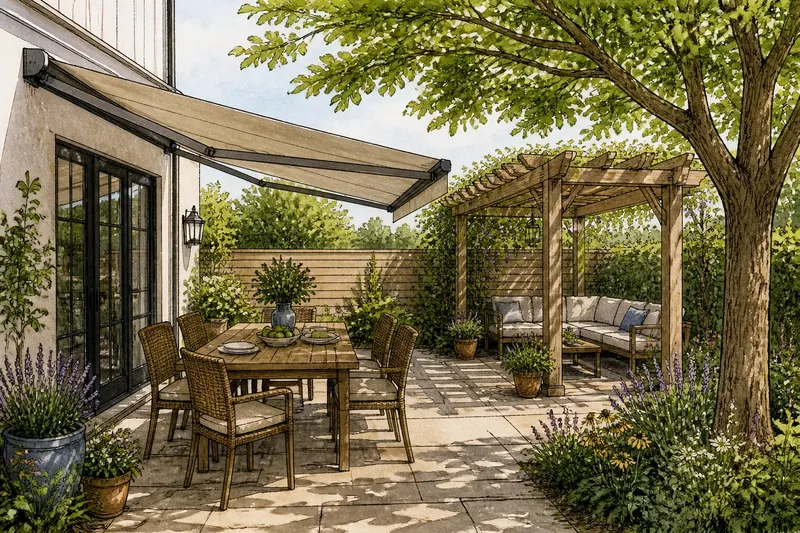
A pot is part of the outdoor room, so its scale should relate to what surrounds it. Beside a broad bench, a tiny pot can disappear visually. On a narrow side table, a bulky planter can make the surface feel cramped. View the pot from the place where you usually sit, as well as from the patio entrance; a container that looks balanced from one angle may block a useful sightline from another.
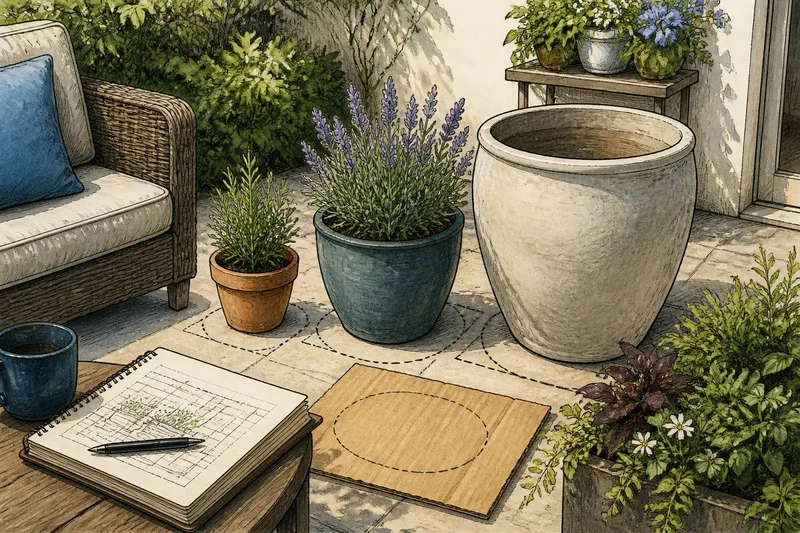
Before buying, mark the intended footprint with cardboard, a plant saucer, or a folded towel. Include space for foliage, not just the pot’s rim. Check whether a door, gate, chair, or walkway needs to pass nearby. This is a placement check, not a route-planning exercise: the question is whether the chosen planting fits the specific spot without making the patio feel crowded.
Weight matters even before a pot is filled. Ceramic and concrete containers can be difficult to shift, while resin and lightweight fiberglass are easier to move but may have a different visual feel. Add damp potting mix and a mature plant, and the container can become much harder to handle. If you expect to reposition it for seasonal displays or cleaning, choose a manageable material and consider a sturdy plant caddy on a suitable surface.
Match pot and care
Container size changes the rhythm of watering. A smaller pot generally has less soil to hold moisture, so it may need attention more often in warm, exposed conditions. A larger pot can hold more moisture, but its center may dry more slowly, particularly when the plant is small or the site is shaded. Neither pattern is universal. Sun, wind, plant type, pot material, and drainage all affect what you observe.
Use the pot’s drainage openings and the plant’s moisture preferences as part of the choice. A moisture-loving plant in a sunny, breezy spot may benefit from more soil volume than a drought-tolerant plant in a cool, protected corner. Avoid selecting a container solely because it promises less watering; check the soil itself and learn how quickly it changes at that location.
Say you have a young rosemary plant and a sunny patio corner with limited floor space. You might choose a medium-sized, stable pot with drainage rather than a huge decorative urn. The plant has room to establish, the container fits the corner, and you can check the mix without lifting or shifting an unwieldy planter. If the rosemary later fills the pot, repotting becomes a decision based on roots and growth, not on the pot’s appearance alone.
Use a week to decide
A short observation period can help you choose a pot before committing to a heavy or expensive container. Use the same plant and intended location throughout the week, and make notes about the site rather than relying on a single glance.
- Day one: Measure the available footprint and note nearby doors, furniture, and walking space. Set a cardboard outline where the pot would sit.
- Day two: Check the plant’s root ball, mature size, and care notes. Decide whether it will grow alone or share the container.
- Day three: Compare possible pot materials and empty weights. Rule out options that would be difficult to move into place.
- Day four: Observe the spot’s sun, shade, and exposure to wind. Note whether the area tends to feel dry or sheltered.
- Day five: Place a temporary object with a similar footprint in the space. Sit nearby and check how it affects the view and usable patio area.
- Day six: Revisit your choice with drainage and watering in mind. If the plant’s needs and the site do not seem compatible, consider another plant or location.
- Day seven: Choose the smallest pot that accommodates the plant’s needs and suits the setting, rather than automatically sizing up.
This routine is useful when the choice is not obvious. If you already know the plant and its intended position, the same questions can be answered in one sitting. The point is to make the container serve the planting and the patio, instead of letting a dramatic pot dictate the arrangement.
Questions about pot size?
How much larger should a new pot be?
Use the plant’s root ball and care guidance as your starting point, rather than choosing a container several times larger by default. The right increase depends on the plant, its growth, and the conditions where the pot will sit.
Can a pot be too big?
Yes, a large volume of mix can remain damp around a small root system, and an oversized container may overwhelm the patio or be hard to move. It is not automatically unsuitable, but the plant and location should justify the extra volume.
Does pot material change plant care?
It can. Material affects weight and how quickly the potting mix loses moisture, so two containers of similar size may need different attention. Observe the mix in the chosen location instead of assuming every pot dries at the same rate.
When should I repot a patio plant?
Consider repotting when the plant’s roots or growth no longer suit its current container, or when its care needs are difficult to meet there. Check the plant’s condition and guidance before making the change; a larger pot is useful only if it addresses the actual constraint.
Let the planting lead
For patio pots, bigger is one option, not a mark of better planning. A well-chosen container gives the plant appropriate room, fits the site, and remains practical to care for. Keep the plant’s mature form, the patio’s usable space, and the pot’s weight in view, then select a size that brings those needs together. That is a more reliable way to choose pot size for a patio plant than starting with the largest container available.