A Five-Minute Patio Reset Before Friends Arrive
A five-minute patio reset clears the table, gathers loose belongings and readies seats, so friends can settle in without turning a quick tidy into a full clean.
The common mistake before friends arrive is starting a full patio clean when the real need is simpler: clear the table, return loose items and make the seats ready. A five-minute patio reset keeps the work focused. It also avoids the familiar cost of spending your last quiet moments scrubbing a surface no one will notice while the cushions and serving space remain cluttered.
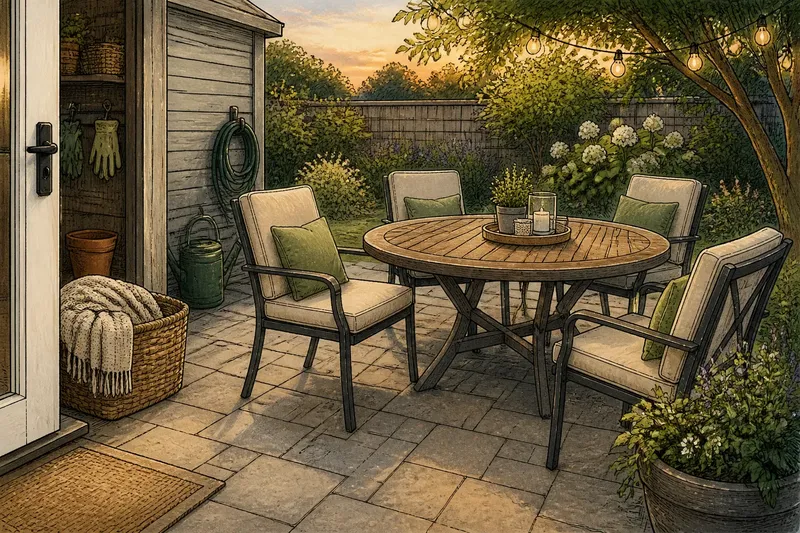
Say you have invited two friends over for a relaxed evening on the patio. There is a watering can beside one chair, a folded throw on the table, and a few cups from earlier in the day. You have only a short window before the doorbell. This invented situation is not about making the patio spotless; it is about removing the small obstacles that keep people from sitting down comfortably.
Start with the arrival view
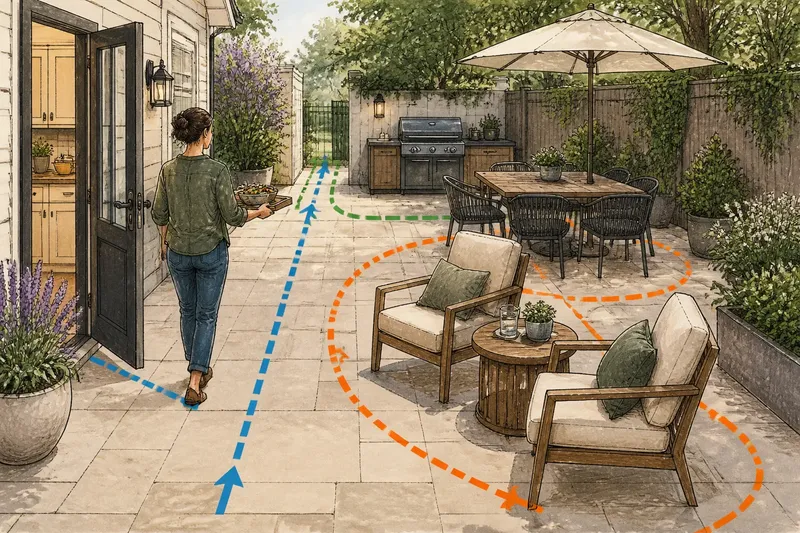
Stand where a guest will first see the seating area, perhaps at the back door or garden gate. Look for the items that seem out of place at a glance: a package on a chair, gardening gloves on the table, or a hose crossing the edge of the patio. Do not begin by inspecting every corner. The aim is to notice what will interrupt the first few minutes of the visit.
In this imagined evening, the watering can is the largest visual distraction, so you carry it back to the potting area. The hose is already coiled, but its end has slipped into the walking area; you move it beside the storage wall. Those choices create a clearer arrival view without requiring you to rearrange furniture or begin yard work.
Use the first moment to make a quick safety-minded check, too. Keep the route from the door to the seats clear of objects that someone could trip over. If a cord, hose, or damaged piece of furniture needs more than ordinary tidying, leave it for a separate repair rather than attempting a rushed fix.
Clear the table first
A table is often the most useful surface when guests arrive. It holds drinks, a snack, or a serving plate, and clutter there makes the whole seating area feel less ready. Remove anything that does not belong to the visit: tools, mail, empty cups, plant labels, or yesterday’s outdoor accessories.
In the imagined patio, you take the cups inside, place the gloves in the garden drawer, and fold the throw before putting it in a clean storage basket. You leave the table surface open. If you plan to serve food, add only the items needed for that plan, such as a small tray or a stack of napkins. A clear surface gives you room to adapt when friends arrive with a dish or a drink.
Wipe the tabletop only if it has visible dust, pollen, or a spill that would transfer to hands or dishes. A damp microfiber cloth is enough for ordinary surface marks; use a cleaner only when the material’s care directions call for it. There is no need to polish every chair or clean the entire patio as part of this reset.
Return loose belongings
Loose items are easier to manage when each has a nearby home. Keep a basket for outdoor cushions or throws, a hook for gardening gloves, and a shelf or bin for small patio accessories. The point is not to add more storage. It is to avoid carrying every stray object from one end of the house to the other when guests are nearly there.
For this invented visit, you put the throw in its basket, carry the watering can to its usual spot, and return a small hand trowel to the garden drawer. You do not gather every leaf from the planting beds or reorganize the storage area. Those jobs do not help a guest find a comfortable place to sit, so they can wait.
If an item has no obvious home, make a temporary choice that keeps it off the table and seats. A tote beside the back door can hold a few things to sort later. Keep it out of the guest area, and avoid filling it with anything wet, sharp, or likely to damage fabric.
Make the seating ready
Check each seat for the simple things that affect immediate comfort. Remove objects, brush away visible crumbs, and set cushions in place if they have been stored indoors. Look for damp fabric, a loose cushion, or a chair that is not stable. A quick reset is not the time to repair furniture or disguise a problem; set an unsuitable seat aside and use one that is sound.
In the imagined scene, one chair has a dry cushion and another has a folded throw draped across it. You put the throw away and place the cushion on the empty chair. Then you pull the chairs into a natural conversation arrangement, leaving room for people to enter and sit without moving someone else’s drink. The result is a seating area that looks ready, not staged.
Keep the arrangement familiar. Moving heavy furniture at the last minute can create new obstacles or leave you with a layout that feels awkward. If a chair is blocking access to the table, shift it only enough to make the seat usable and the path clear.
A five-minute patio reset?
What should I do first?
Start with the guest’s arrival view, then clear the table and obvious obstacles. Those visible changes make the seating area easier to use without committing you to a full clean.
Should I sweep the whole patio?
Only address debris that is conspicuous or underfoot where people will sit and walk. A broad sweep can wait if the surface is already usable and there is no spill or loose material that needs attention.
What if cushions are damp?
Do not cover damp cushions with a throw or invite someone to sit on them. Set them aside to dry as their care instructions allow, then use a dry seat or bring out a suitable indoor cushion.
What can wait until after guests leave?
Routine jobs such as cleaning the grill, washing outdoor textiles, pruning plants, and sorting storage can usually wait. Prioritize what affects comfort, cleanliness at the table, and a clear route to the seats.
Leave deeper chores aside
The five-minute limit works best as a boundary. It helps you choose a few visible, useful actions instead of letting one small mess lead to washing cushions, trimming plants, or hosing down the whole patio. If a job requires special products, handling equipment, or more time than you have, save it for another day and follow the item’s label or manufacturer instructions when you do it.
In the invented situation, the reset ends with a clear table, a dry seat, and loose tools returned to storage. A few leaves remain near the garden bed, and the table may not look newly polished. Neither issue prevents the guests from sitting down. The expected observable result is straightforward: people can reach the seats, set down a drink, and start talking without first moving someone else’s belongings.
Before you step inside, take one last look from the doorway. Ask whether anything remains on a seat, whether the table has useful open space, and whether the route between the door and the seating is clear. If the answers are yes, the patio is ready for this visit. A five-minute patio reset is most useful when it stops at that point; save the larger clean for a time when it can be done without rushing.